Home is Where You Park it
I blossomed in the passenger seat of a white dually truck, turned cream from dirt and dust, and speckled with splattered insects.

I blossomed in the passenger seat of a white dually truck, turned cream from dirt and dust, and speckled with splattered insects. They stood no chance against the roaring beast pushing 15 miles over the speed limit. The rear end of the truck is as wide as the lane it drives on. It was a stable home, anchored to the ground by six tires, not the typical four.
This heavy-duty vehicle was designed for some serious towing. So unsurprisingly, connected to the hitch like a monstrous fish hooked on a line is a massive 40-foot trailer. Pulling something so large requires wide turns, strong brakes, and a whole lot of faith. But I was never afraid. Sitting on the passenger side of the truck as my dad drove us down endless stretches of open road, I felt at home.
The United States is Our Backyard
In 2023, the Census Bureau found that 342,000 people were living in an RV, boat, or van, which is a 41% increase from 2019. As housing prices rise and the job market tightens in the wake of COVID-19, hundreds of thousands of people have turned to non-traditional homes. There are two groups of people who live in recreational vehicles: those who have no other option and those who choose to do it. My family has always been part of the second group. For three generations, we’ve chosen this lifestyle, and it continues to shape our definition of “home”.
When I tell new friends that my dad chooses to live full-time in an RV, I’m almost always hit with a look of confusion. Most people struggle to understand what would motivate someone to part with all their stuff, to give up the security of a home, and to move away from their loved ones. But for my family, the sacrifices are worth the freedom of living on the road. Home is not just a brick-and-mortar house on an unchanging street in an unchanging neighborhood. People often assume that RVers don’t have a home, don’t have a place to establish roots. But they do. Their RV is their home, and the United States is their backyard.
It Runs in the Family
A life on the road is not an easy one, and it ain’t cheap either. Things are constantly breaking. With each pothole, speedbump, and low-hanging tree branch, some screw is bound to wiggle loose. These challenges test the will of RVers to keep moving. For my family, it seems as if there is a force written in our genetic makeup, driving us forward at full speed towards a life on the road.
“The wanderlust in my heart came from my dad, and I think your dad gets it from me. We love to travel, and I still love to travel,” my grandfather says.
It all started in the early 1940s when my great-grandfather, the original Karl Brenneman, traveled the country on the back of a Harley-Davidson motorcycle, making my grandparents’ class C motorhome look like a sprawling estate. He traveled to every state in the lower 48, making money along the way as a sign painter and magician. Following the influence of his father, my grandfather knew he wanted to do the same thing. Not to be a magician, despite his father teaching him sleight of hand and card tricks, but to travel to all the states.
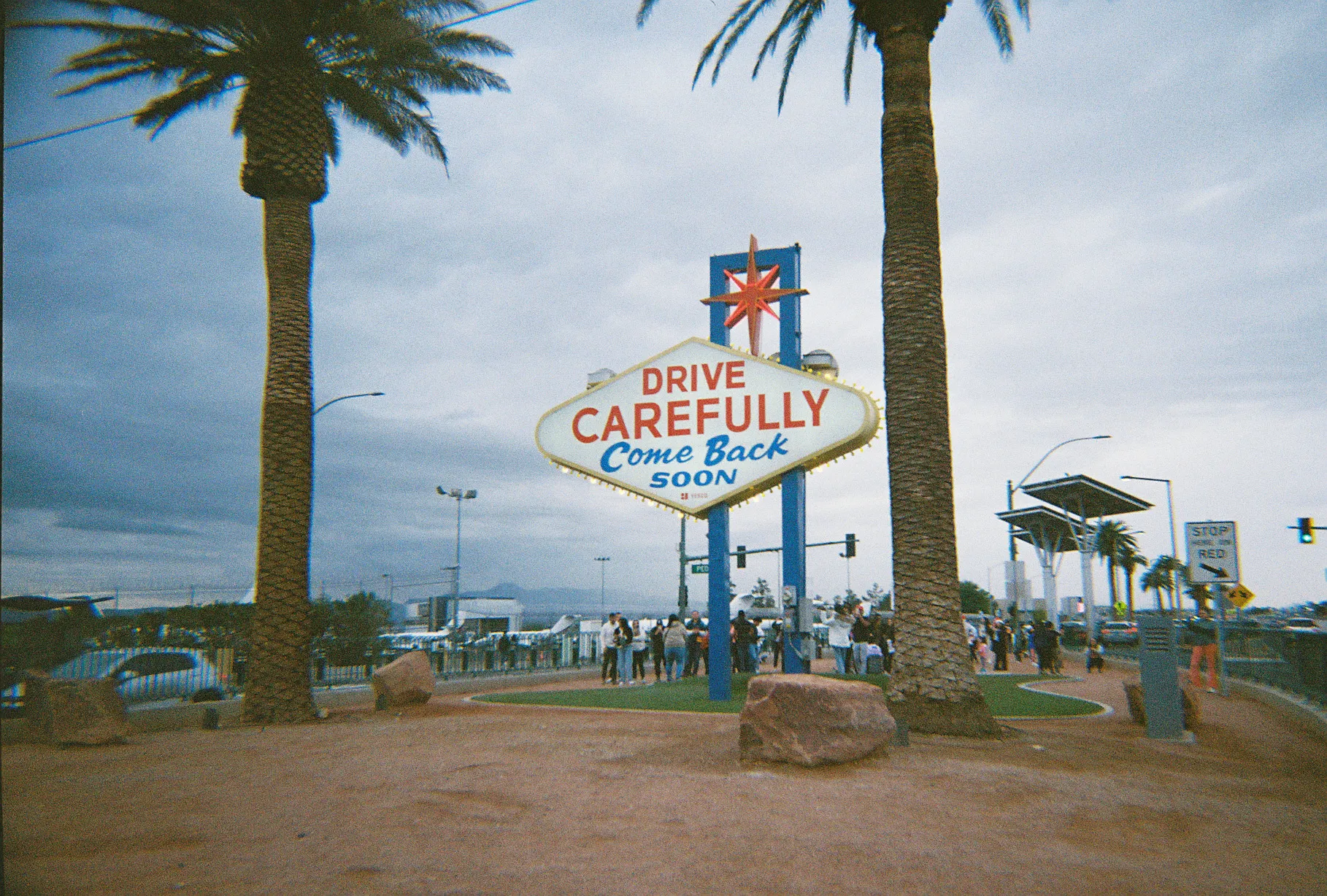
My grandmother did not share my grandfather’s aspirations for adventure growing up. Her father was a bootlegger and a bull rider. He was tough as nails and worked tirelessly for every paycheck. He never took his family on vacations. Instead, he placed his bets on horses, gambling their spare change on the racetracks. My grandmother never left California until she met my grandfather in their mid-twenties. He took her out to Las Vegas, and from that point on, she was hooked, “My comfort zone went from a small town on the outskirts of Los Angeles to the entirety of the United States.”
A passion for travel and adventure defined my grandparents’ relationship. They traveled the West Coast on the back of a motorcycle. After they married, they moved to Oregon and bought a small 18-foot trailer for weekend trips down Highway 101 to the rugged and rocky Oregon coast. In 1984, they bought a rundown RV park in Sisters, Oregon. Circle 5 was situated on the outskirts of town along Highway 20. It’s a quiet place with a constant rumble of diesel truck engines and rattling logs as streams of lumber trucks pass by. It was a small place with dusty gravel lots and broken hookups. Rusted trailers with sagging awnings were permanent tenants.
At 12 years old, my dad worked alongside my grandmother, who was up before sunrise each morning, repairing broken hookups, hauling away trash left behind by previous tenants, and eventually building a small laundry building. Every day, new people would roll into Circle 5, loggers who needed a cheap place to stay while working long hours in the dense forest of Ponderosa Pine and Douglas Fir, and Vagabonds who had not a clue where they would go next.
“That’s how we got the idea to live on the road full time, through the people who came to stay in our park,” my grandmother said, “We met some wonderful people, and they’re all from somewhere else. There is something about the journey of the road and the people you meet along the way. They love their country, and they want to see every part of it.”
The Friends You Meet Along the Way
RVers love to make friends with their neighbors. It is widely known inthe RVing community that if your door is open, you’re fair game for a visitor. If you don’t want to be bothered, close your front door. Another rule is that if you want to make friends with other RVers, put out four, five, or six lawn chairs, and they will get the hint. RVers are typically a curious bunch; they love to learn about your set-up, what kind of RV you have, and most importantly: where you’ve been and where you are going. “The first thing that people ask us isn’t ‘How are you?’, it’s ‘Where have you been and where are you headed?’,” my grandpa says.
Adhering to the principles of RV living, my grandparents always set out more than two chairs under the shade of their awning. This is how they met two of their closest RV friends, Donna and Terry Lanard. It was 2011 when the Lanards pulled into Lake Magic, Florida, and parked in the spot across from my grandparents. By mid-afternoon, the lawn chairs were filled, laughter filled the air, and a friendship bloomed under the Florida sun. Now it’s 15 years later, the two couples have retired from the lifestyle but remain the best of friends.
“Our best friends are the people that we camped with along the way,” Donna Lanard says, “It’s not the people that lived next to us in our houses. It’s the people that we traveled the roads with.” It’s easy to connect with people who share a similar perspective on the world around them. You share the tips you’ve learned along the way and the hidden spots many drive by without a second glance. The friends my grandparents made along the way all share a deep appreciation for the country that comes from learning the cultural and geographical nuances of each state. From tropical beaches in Florida to the rollinghills of Montana, from otherworldly red-rock formations in Utah to the lush green wilderness of Washington. “You really can’t appreciate the country unless you travel it. It’s about the experience of entering an area that you haven’t been to and seeing the sites that you don’t find in the guidebooks,” Terry Lanard says.
Life on the Road
It was hard for me to understand why my dad chose to leave North Carolina. He left the day after I graduated high school. Watching him pull his trailer out onto the road, I backed off from asking him to stay, knowing in my gut that I wanted him to go. I was headed off to college, to a new adventure of my own, and I wanted my dad to have the same opportunity.
He had already been RVing part-time since the beginning of the COVID-19 pandemic, but traveling for long periods of time was not possible while I was still in school. “I was driven by the fact that I had been in Raleigh for 25 years at the time,” my dad said, “I knew I wanted to leave, but I wasn’t sure where I wanted to go.” In the last three years, my dad has been to 47 of the lower 48 states. He has parked out in the middle of the desert, with nothing and nobody for miles. He’s stayed the night at the world’s largest railyard in Nebraska, where the vibrations and whistle of passing trains became his constant companion. “I’ve been to a lot of places I would have never gone to. Now I realize there’s a lot out there, to life,” he says.
When I call him now, the first thing I ask isn’t how he’s doing, it’s where he is. Despite rarely being in the same state, our bond is stronger than the distance. Sometimes we talk about places we might go together, our next adventure. When we do, my mind always drifts to my favorite memory with my dad.
It All Starts with a Road trip
It was mid-October 2020, and COVID-19 was at its peak. Sophomore year of high school was completely online, which made it possible for my dad and me to hit the road for long stretches of time. This time around, we were making our way from Raleigh, North Carolina, to Sierra Vista, Arizona. We got to Arizona in record time, only taking us four days. We would wake up at sunrise and drive until sunset. We never knew where we were going to stay the night. Night one, we made ourselves at home in a Cracker Barrel parking lot outside of Atlanta, Georgia. Night two was at a Bass Pro Shop in Dallas, Texas.
One night, we puttered through Monticello, Utah, a town with one gas station, one stoplight, and one restaurant. We were desperate for food and low on options. The only restaurant in town was the Thai place next to where we were parked for the night. “It was just you and me;we were having amazing food in a place neither one of us had ever been, and probably we’ll never go to again,” my dad says. It was in that restaurant that I realized “home” is just where you feel completely at ease. Sometimes Raleigh is my home. Sometimes it’s the passenger seat of my dad’s truck. And sometimes it’s a booth in a Thai restaurant in the middle-of-nowhere Utah, sharing a bowl of noodles.